Published on
5.9.2026. u 12:36h
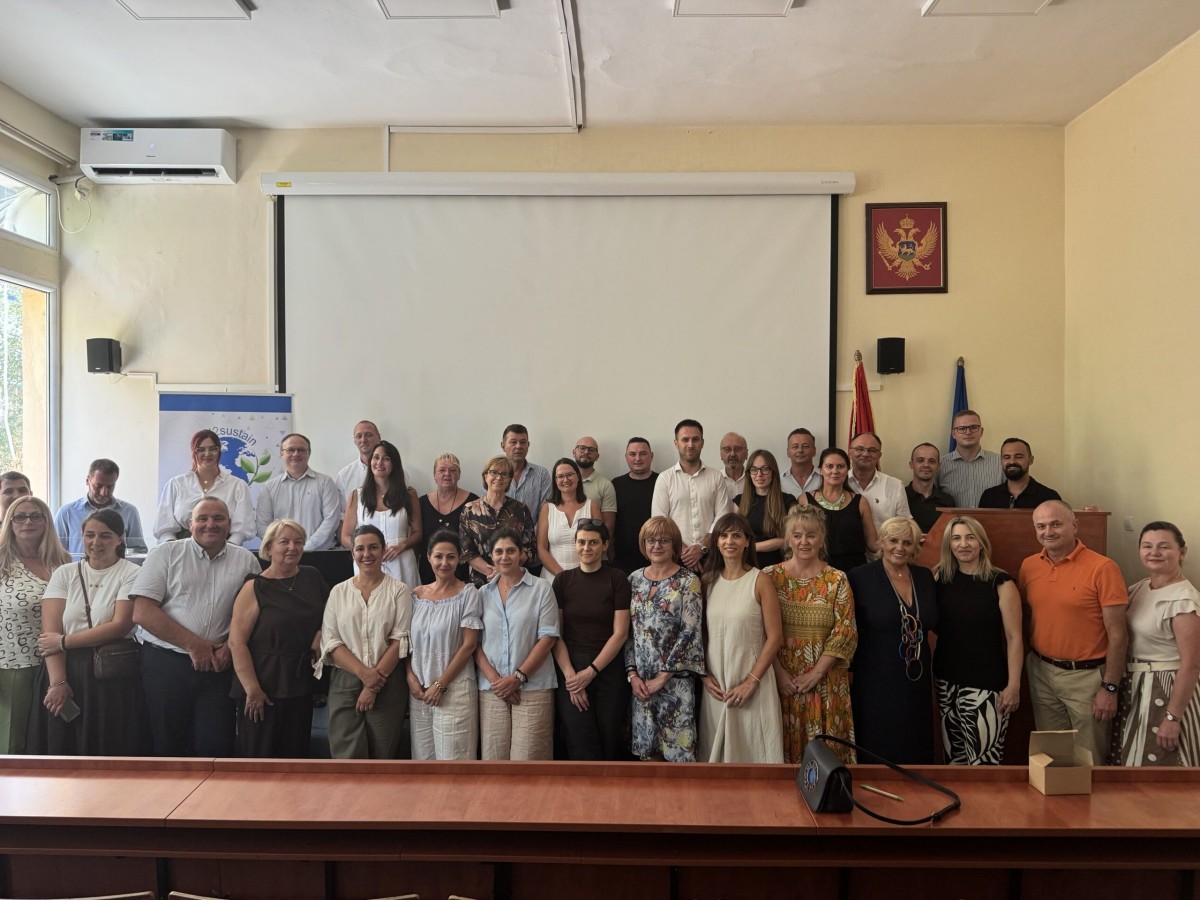
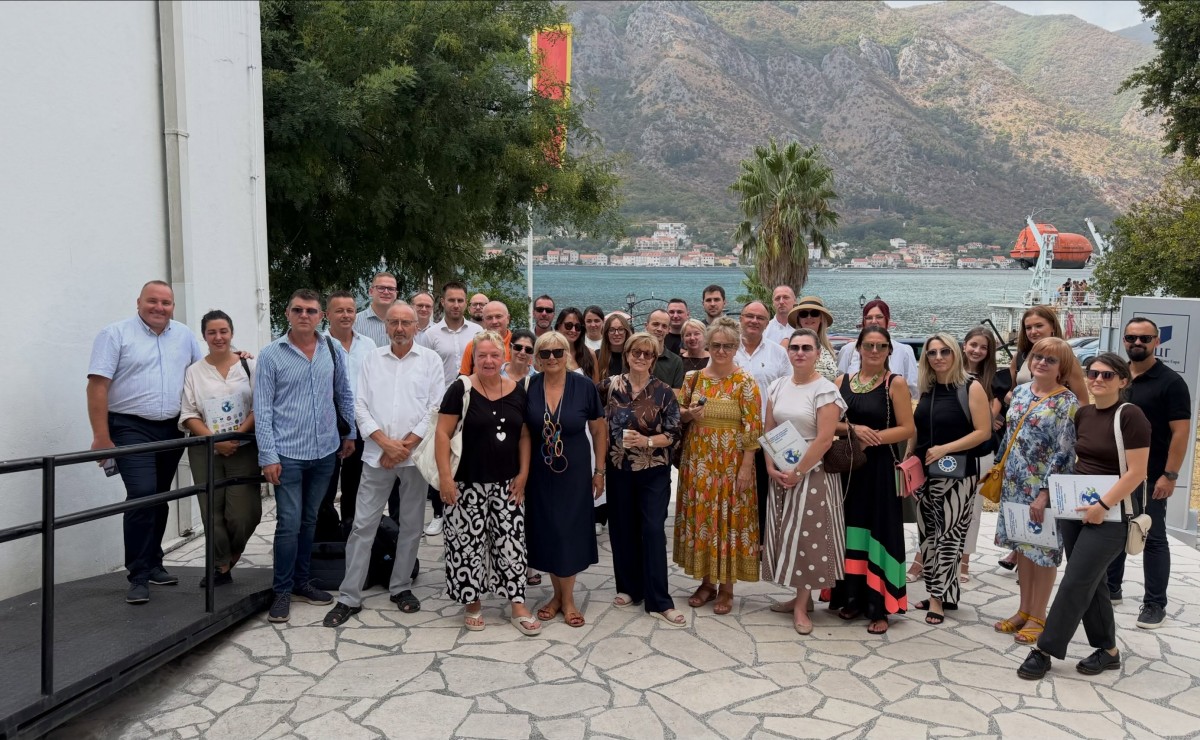
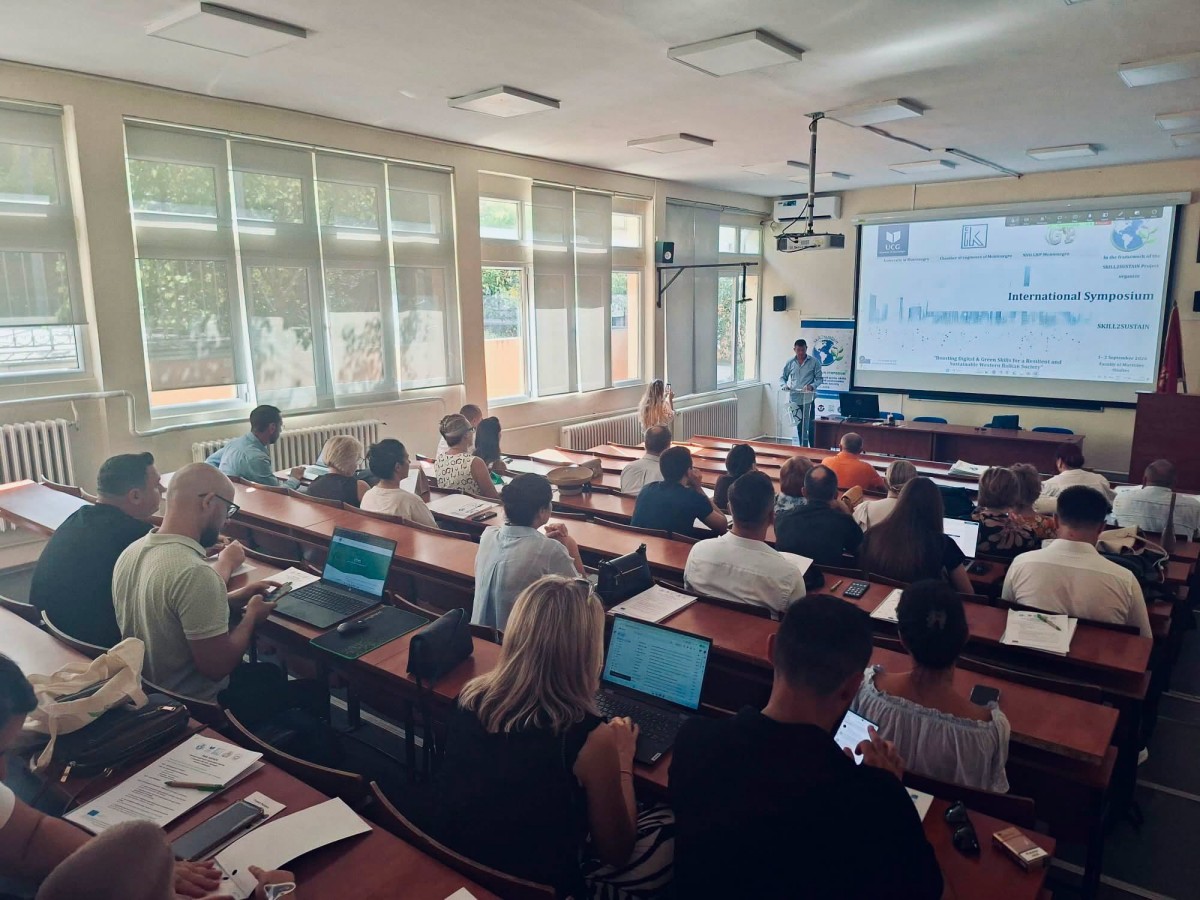
Teaching staff and researchers from the University College CEPS Kiseljak participated in the international SKILL2SUSTAIN Symposium, held from 1 to 3 September 2026 in Kotor, at the Faculty of Maritime Studies of the University of Montenegro. The symposium brought together researchers and practitioners from Montenegro, Croatia, Slovenia, Serbia, Bosnia and Herzegovina, Albania, and North Macedonia, providing an opportunity to exchange knowledge and experience in the fields of green and digital skills development, sustainability, climate resilience, and contemporary approaches to education. The programme included five sessions and a total of 41 presentations, as well as two keynote lectures addressing the sustainability of cultural heritage and risk management in the development of sustainable infrastructure.
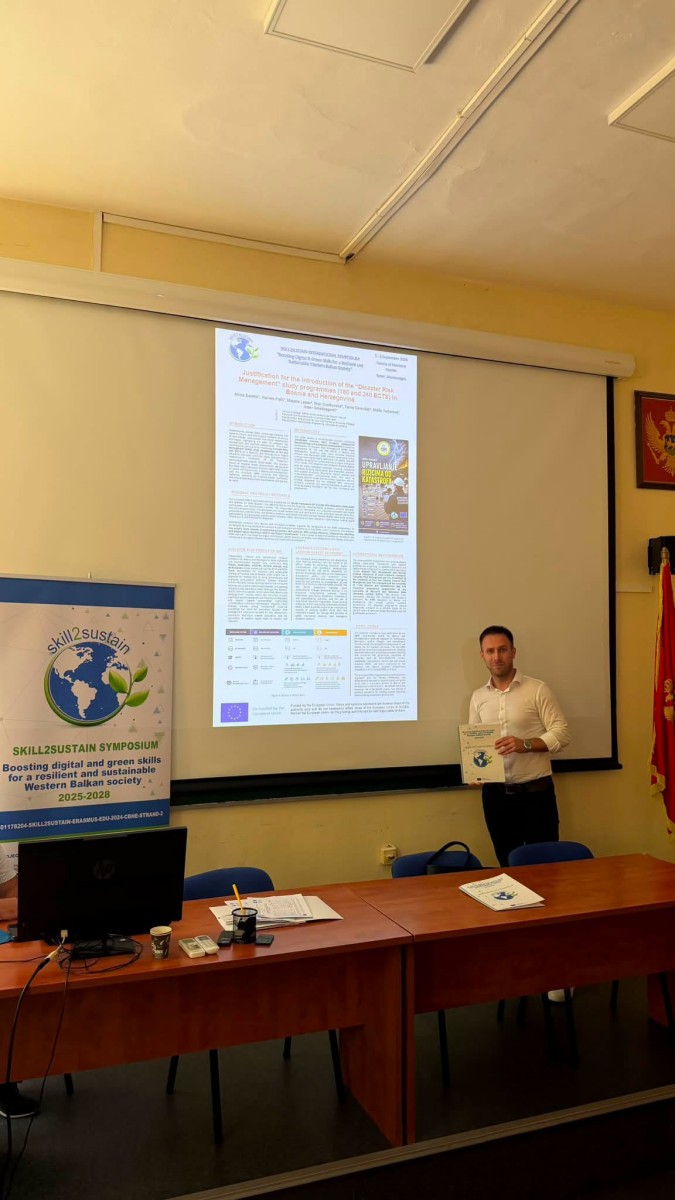
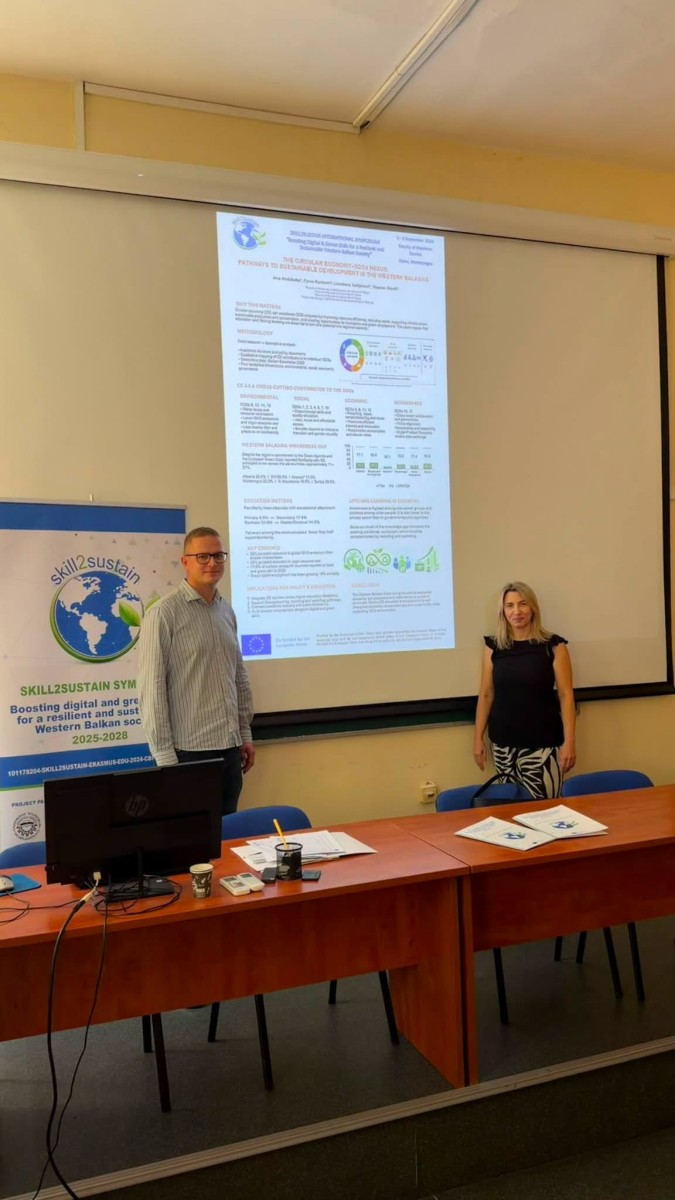
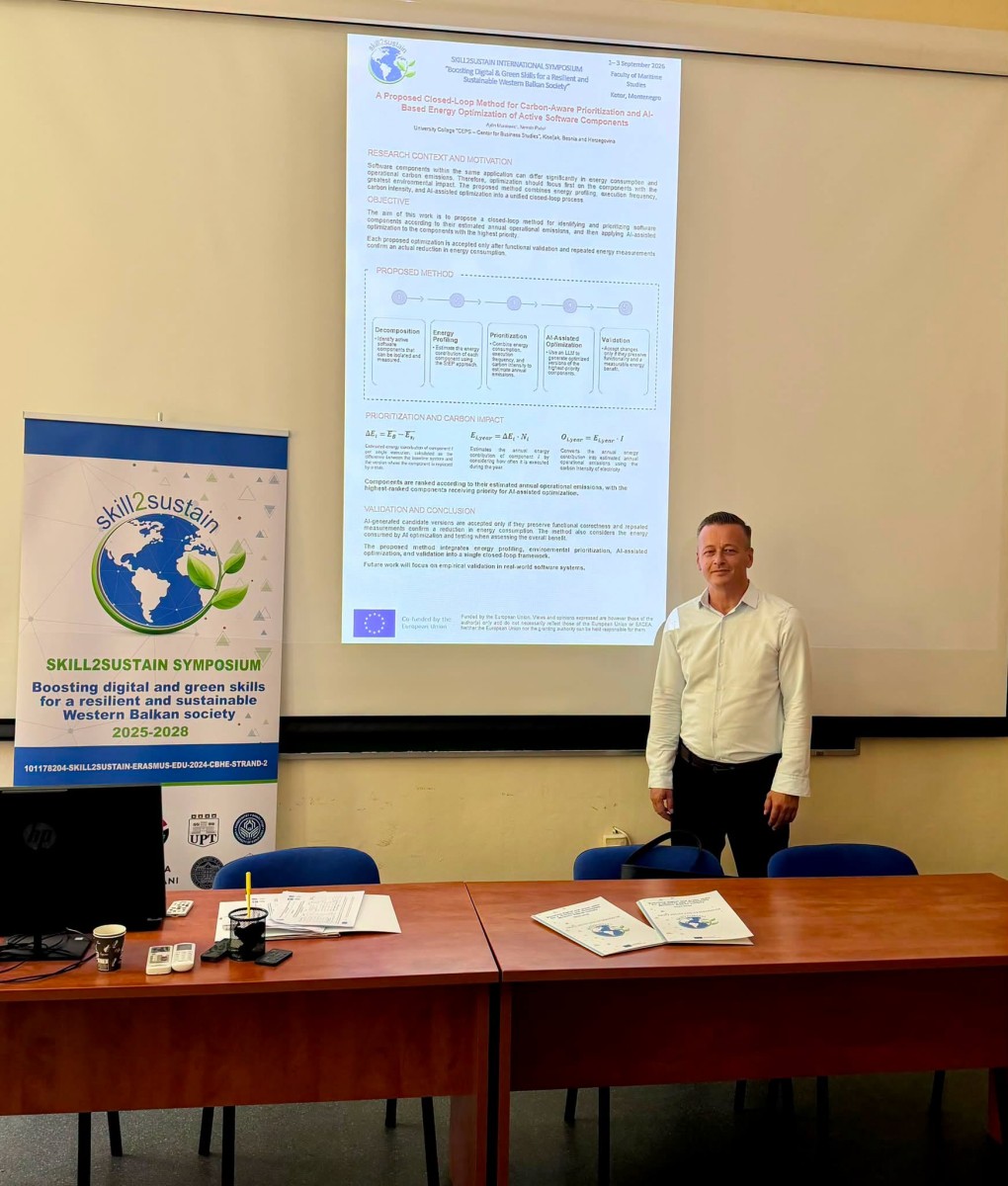
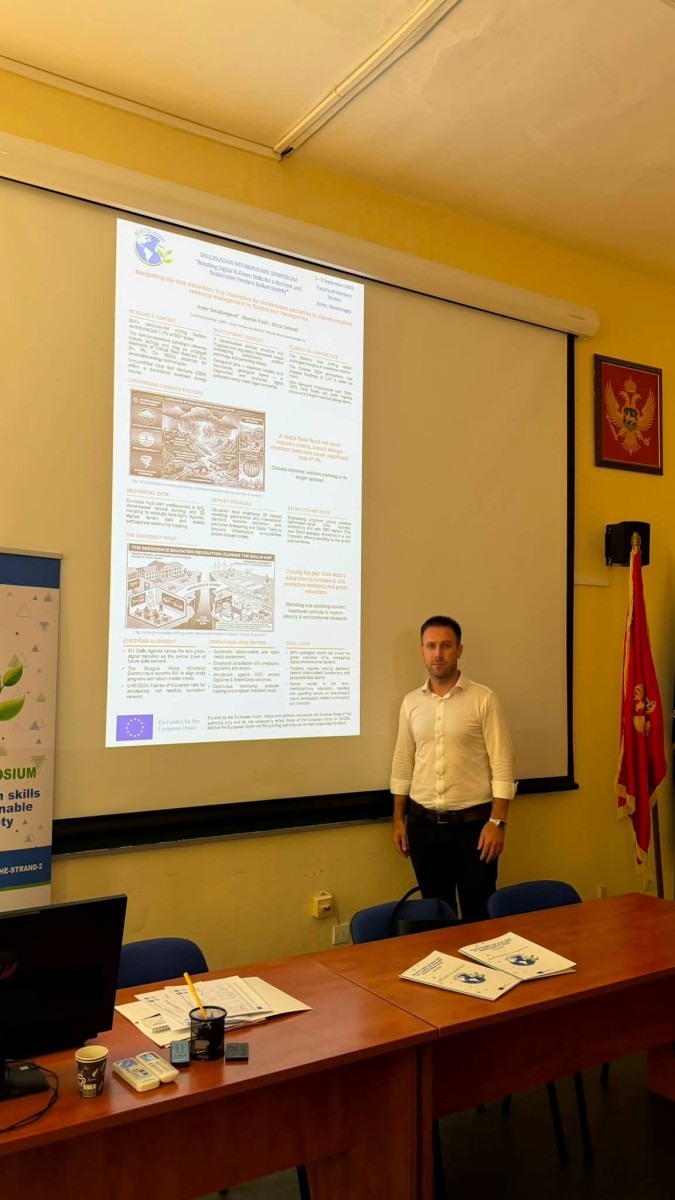
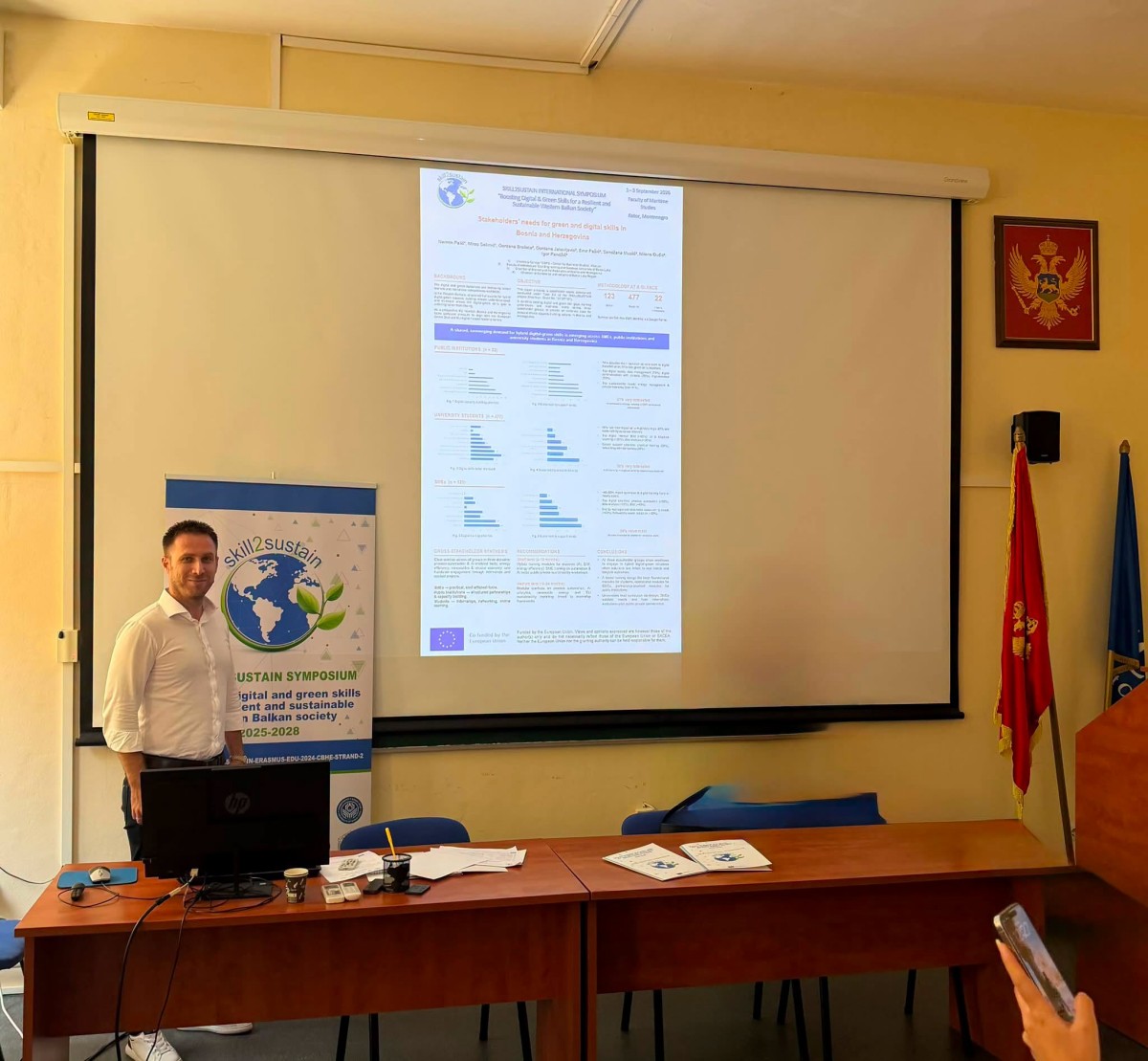
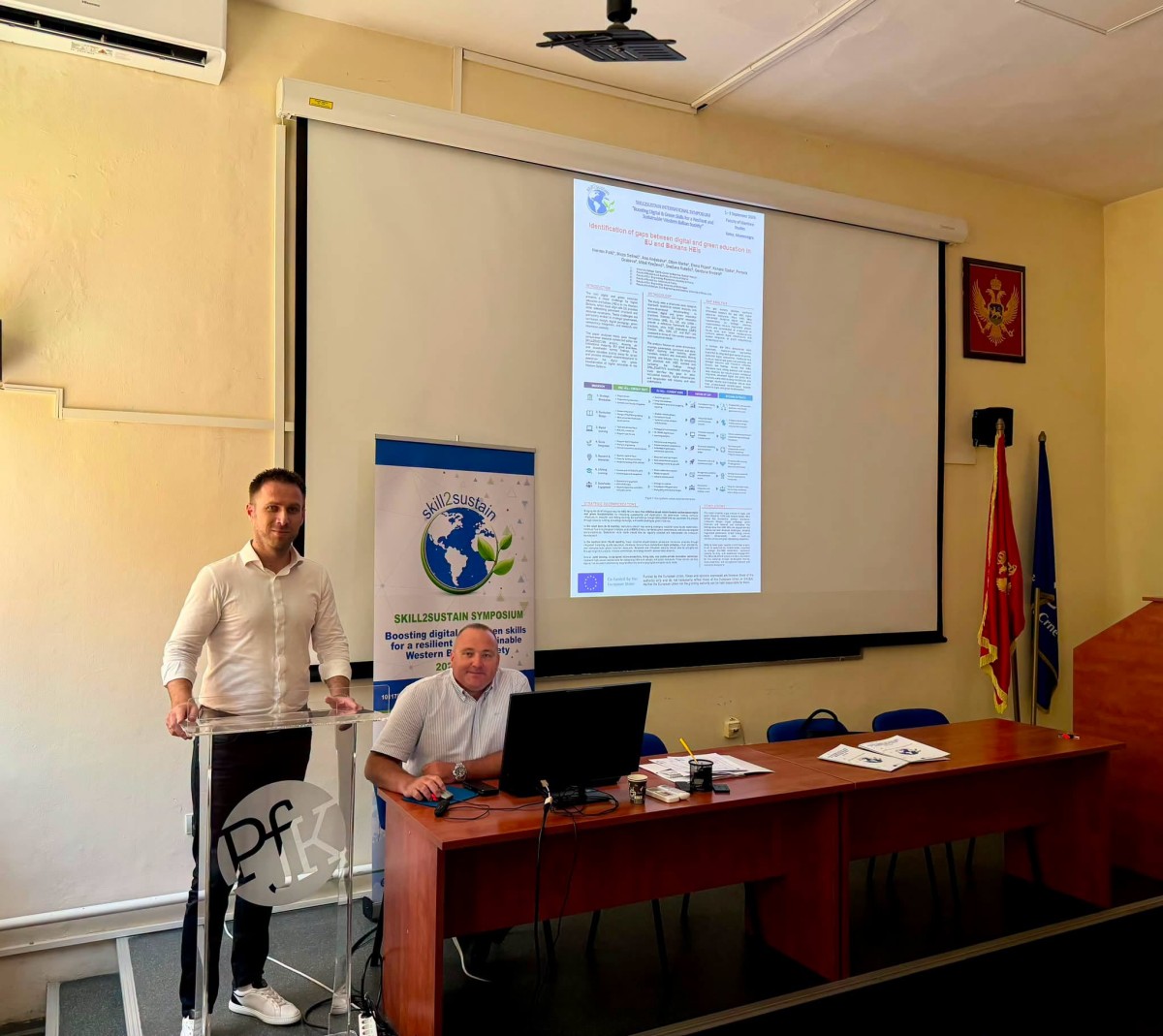
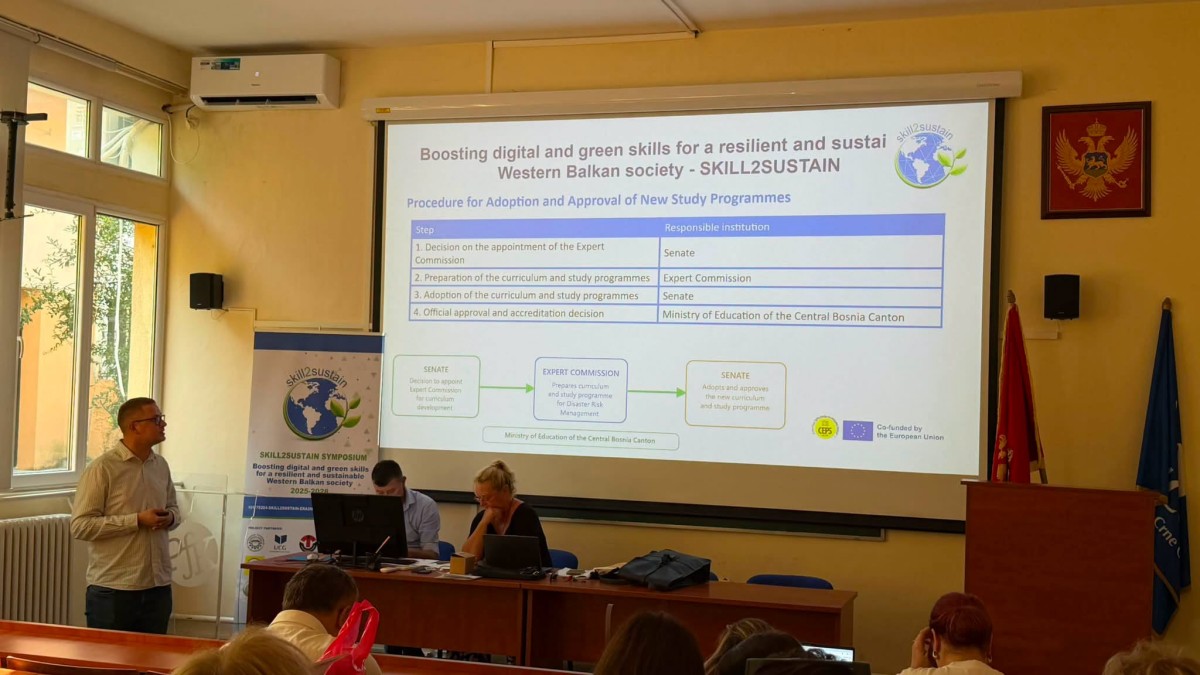
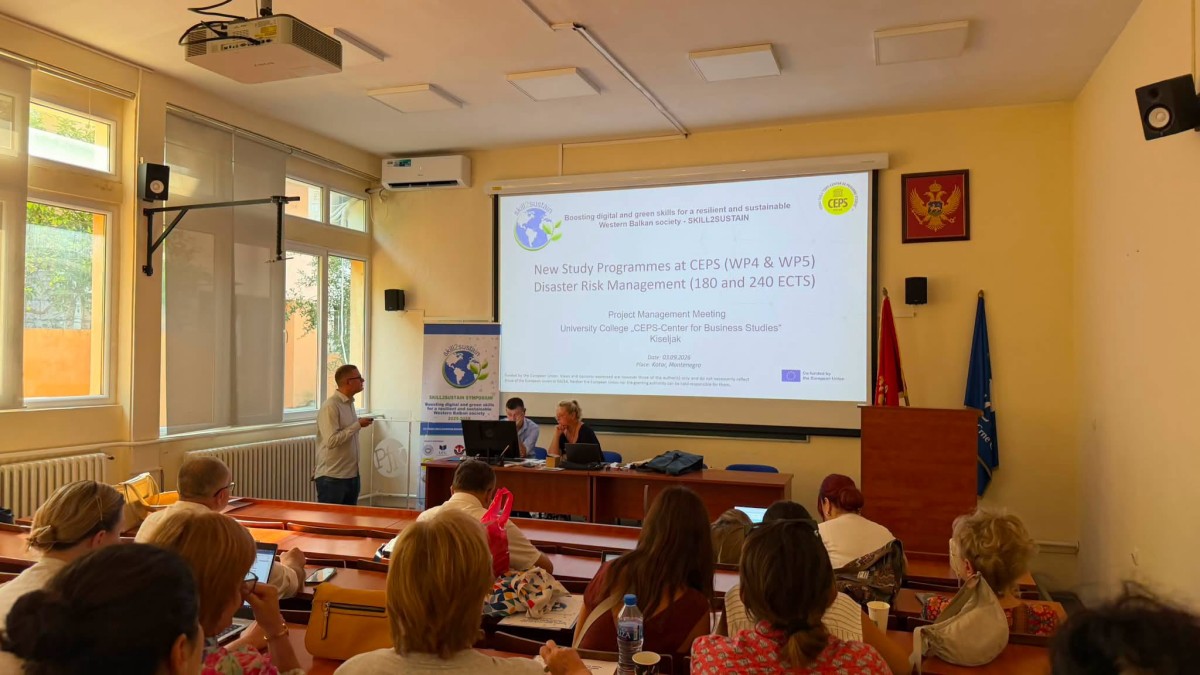
Representatives of CEPS made a significant contribution to the symposium by presenting a total of six scientific and professional papers: “Stakeholders' Needs for Green and Digital Skills in Bosnia and Herzegovina” (Nermin Palić, Mirzo Selimić, Gordana Broćeta, Gordana Jakovljević, Emir Pašić, Sendžana Muslić, Milena Đuđić, Igor Pandžić); “Justification for the Introduction of the ‘Disaster Risk Management’ Study Programmes (180 and 240 ECTS) in Bosnia and Herzegovina” (Mirzo Selimić, Nermin Palić, Mirjana Laban, Meri Cvetkovska, Tomo Cerovšek, Miliša Todorović, Amer Smailbegović); “Identification of Gaps Between Digital and Green Education in EU and Balkans HEIs” (Nermin Palić, Mirzo Selimić, Ana Andabaka, Oltion Marko, Elona Pojani, Konalsi Gjoka, Perseta Grabova, Miloš Knežević, Snežana Rutešić, Gordana Broćeta); “Navigating the Twin Transition: The Imperative for Modernized Education in Climate-Resilient Resource Management in Bosnia and Herzegovina” (Amer Smailbegović, Nermin Palić, Mirzo Selimić); “The Role of Digital Forensics in the Development of Digital and Green Education in the Era of Artificial Intelligence” (Hadžib Salkić, Mirzo Selimić, Nermin Palić); and “A Proposed Closed-Loop Method for Carbon-Aware Prioritization and AI-Based Energy Optimization of Active Software Components” (Ajdin Muratović, Nermin Palić).
The participation of CEPS teaching staff and researchers in this international event represents an important contribution to the institution’s international visibility and further confirms CEPS’s active engagement in research and professional activities focused on the green and digital transformation of higher education and the economy. At the same time, the symposium provided an opportunity to exchange experiences with partner institutions from the region, strengthen existing cooperation, and explore opportunities for new joint research and project initiatives in the fields of sustainability, digitalisation, climate resilience, and the development of future-oriented skills.
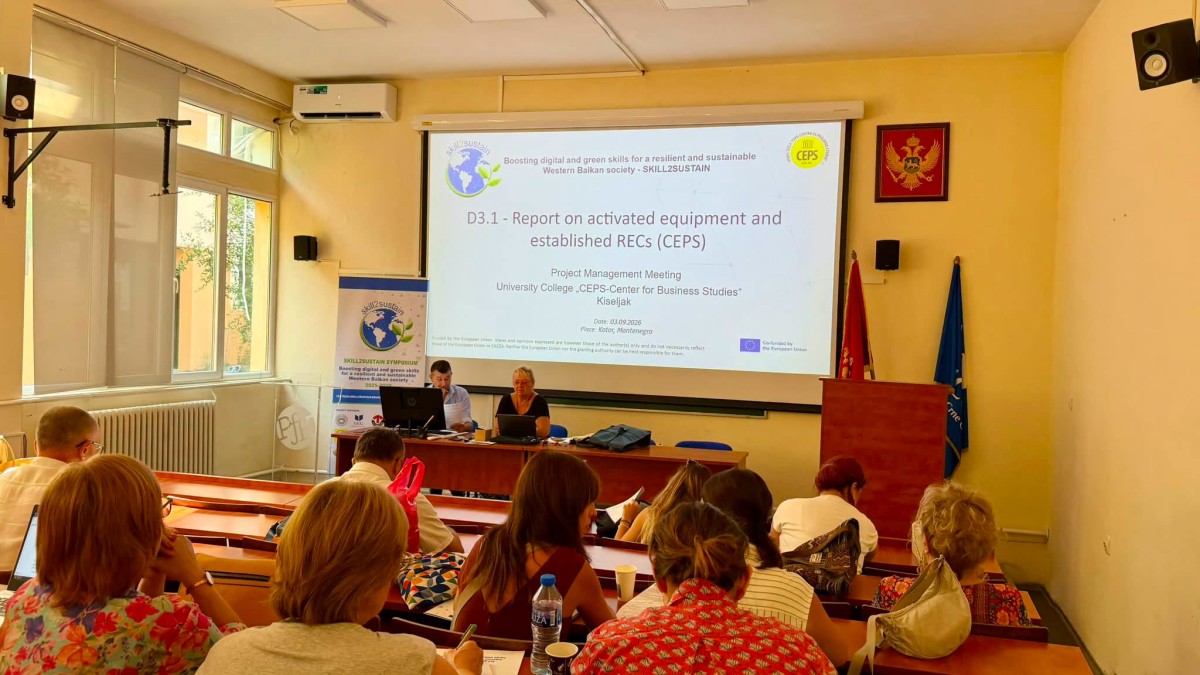
On September 3, the consortium held its project management meeting. Partners reviewed completed deliverables and milestones, including the report on activated equipment and established Research and Education centers, the expanded academia-stakeholder network, and the stakeholder workshops. Discussion continued on new and modernized study programs, new certified lifelong learning programs, and new blended learning materials, as well as the peer-review plan and the timeline for the project’s Special Issue in the UBL Journal and the e-library. The meeting closed with a detailed distribution of tasks and an action plan for the next project period.